Saving Colors of the Sea

Generated by Midjourney
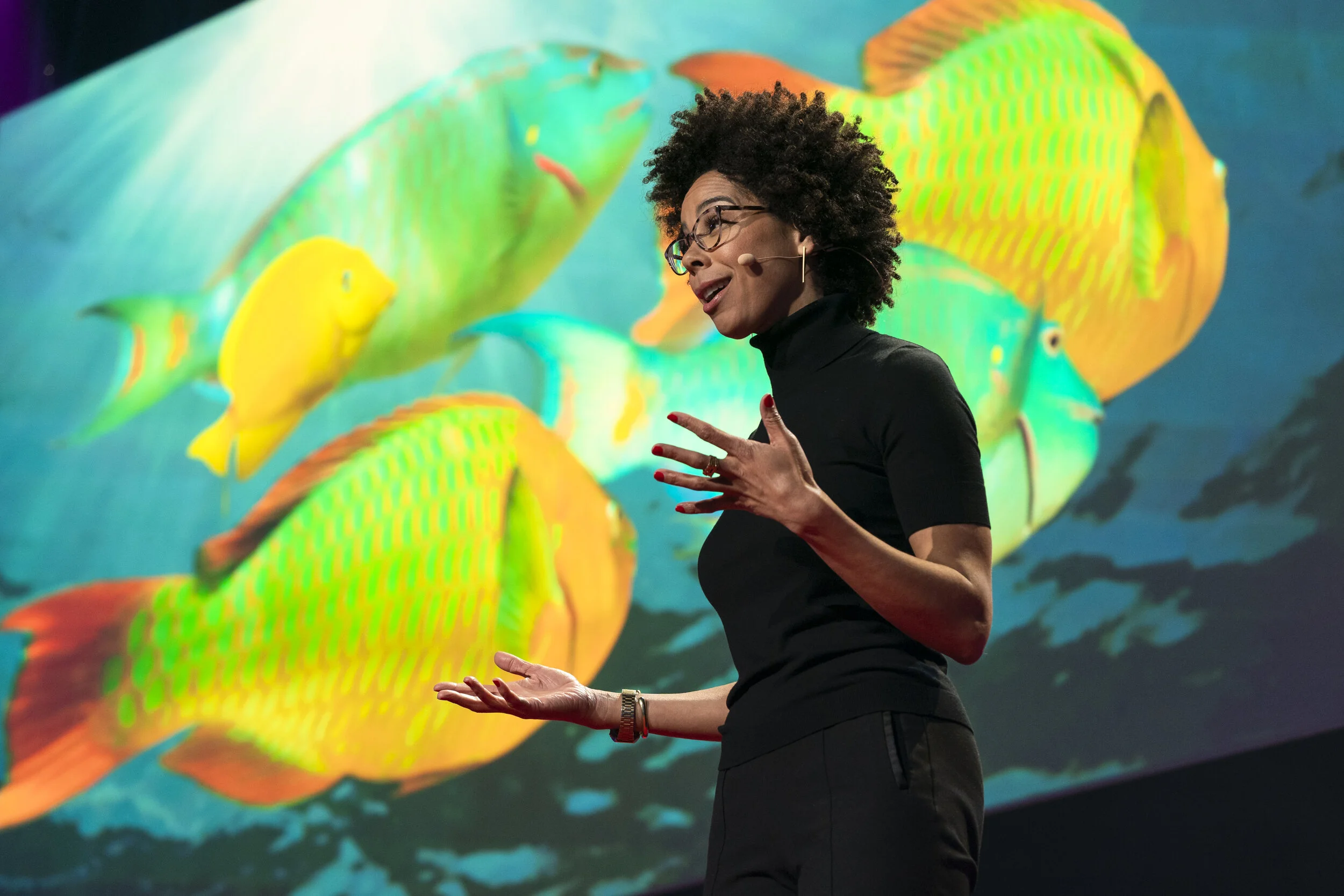
Dr. Ayana Johnson, marine biologist, fell in love with the coral reefs at the age of five, when she looked down through a glass bottomed boat in Key West, Florida. Soon after, she discovered her favorite sea creature, the parrotfish; favorite because these fish clean the algae off of the reefs, poop out fine white sand, have super vibrant colorways, and in their lifespan they change from female to male, and when they sleep they form a mucus bubble from their head that masks their entire body and protects them from danger.
Generated by Midjourney
From childhood wonder to a mission
Unfortunately, the coral reefs and the parrotfish are quickly disappearing. Here's why.
Overfishing, pollution, habitat damage and burning fossil fuels is causing coral reefs to become extinct. In the Caribbean, 80 percent of the coral reefs are already gone. That’s why Ayana has been working with fishing communities in the Caribbean, counting fish, interviewing fishermen, redesigning fishing gear and developing smart policy. It makes Ayana furious knowing that if we keep burning fossil fuels at our current rate, the temperature of the ocean will continue to rise, and more than 99% of our coral reefs could be wiped out. Continuing to burn fossil fuels makes Ayana sick because no one seems to realize that we are losing entire ecosystems over it.
Via Pexels
Protecting our ocean's rainbow
The lives of hundreds of millions of people rely on the sustainability of our coral reefs. We are losing some of the most vibrant colors and ecosystems on the planet. In the words of Ayana, “While it is naive to think we can solve or stop climate change, it is also naive to give up…Places like Belize, Barbuda and Bonaire are protecting these VIP's (Very Important Parrotfish).” Just like Dr. Johnson and the fishing communities in the Caribbean, we can do more to establish protected areas, which can save the coral reefs and save some vibrant color in this world.
© 2024 Localyst